Cheap Places to Sleep in New Zealand
Hostels, campsites, mountain huts and the rules on freedom camping and working for a bed. Where to sleep in New Zealand for less.

5 min read

The best night's sleep I ever had was in Levin in 2009, in a shop window. I'd seen a big sign that said "BEDS" and a door that was open, and as it was nearly five and there was nobody at the desk, I took it for a motel having a quiet week and chose one at the front, under the lamps, where it was warm. It was a furniture shop. I found that out at nine the next morning, when I woke up to a couple from Shannon looking at me through the glass, and a young man in a tie telling them that I didn't come with the mattress. I'm not allowed in there any more, but I still send him customers.
So the first thing to know about sleeping cheaply in New Zealand is that it should be somewhere that's expecting you. Luckily there's plenty of choice, from bunks in town to huts halfway up a mountain, and most of it costs less than the lamp.
Hostels
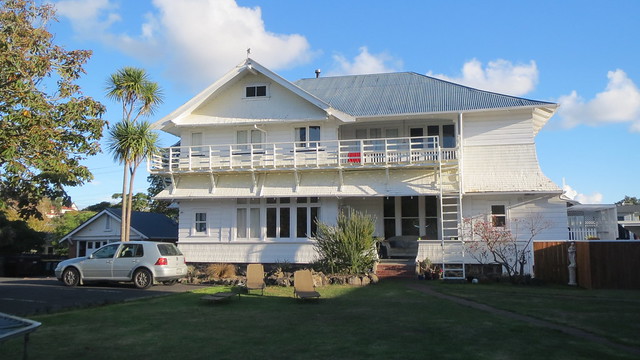
A bed in a dorm is the cheapest way to sleep under a roof here, and a private room in a hostel costs more but still a good deal less than a hotel. You'll usually get a kitchen, which is where the real saving is, as well as a lounge with a guitar that's missing a string.
Book ahead from December to February and around Easter, particularly in Queenstown, and read the recent reviews rather than the good ones. If you're a light sleeper, ask for a smaller dorm, and take earplugs, because there's one man who snores in every hostel in New Zealand, and I've come to believe that it's the same man.
Holiday parks
These are campgrounds with hot showers, kitchens, and cabins if you don't own a tent. A basic cabin shared between two or three people can cost about the same as dorm beds, and you get a door. I'm very attached to holiday parks. Every summer of my childhood took place in one, next to a family called the Hendersons, who had a better awning.
Department of Conservation campsites
This is the best bargain in the country, as far as I'm concerned. The prices depend on how much comfort you can't live without:
- Basic: Free. There's a toilet and perhaps some water, and you bring everything else, including your attitude.
- Standard: A small fee per night. There's a toilet and a water supply, and sometimes a cold shower, for character.
- Serviced: A little more again, for flush toilets, hot showers and a kitchen or cooking bench.
If you're camping for a long while, there's a Campsite Pass that lasts a year. It doesn't cover every site, and there's a limit on how many nights in a row you can spend at the same one, but if you're out in a tent most nights it pays for itself before long. Boil any untreated water, please. I didn't, once, and I saw a good deal of one particular toilet.
Mountain huts

We've got hundreds of huts in the hills, and sleeping in one is about as New Zealand as you can get without owning a ute. A standard hut costs less than a dorm bed in town, a serviced one a little more, especially on busy summer weekends, and the basic ones are free, for reasons you'll see when you arrive. The famous ones have their own prices.
If you plan on a lot of them, the Backcountry Hut Pass covers the non-bookable ones for a year, but it doesn't hold you a bunk, so it's first come, first served, and the last one in sleeps by the door with the boots.
The Great Walk huts are another matter, and international visitors pay a good deal more in summer. If you'd like the Abel Tasman for less, take a tent, because a campsite there costs a fraction of a bunk, and it's the same sea.
Freedom camping
People hear the word "freedom" and stop reading, which is how they end up with a fine. Whether you can sleep in your vehicle depends on the place, and a lot of spots are only for certified self-contained vehicles with a toilet that's fixed in and a current green warrant card. I've gone through it in what to know before visiting, and the council or the Department of Conservation will tell you what's allowed where. Pulling over somewhere pretty and hoping isn't a category.
Working for your bed
This one's important, so I'll take the funny voice off for a moment. Lots of hostels and farms will offer you a bed in return for a few hours' work, and it sounds like a friendly arrangement between adults, but Immigration New Zealand counts it as work, WWOOFing included, even if no money changes hands. You can't do it on a visitor visa or an NZeTA. You'd need a visa that lets you work, such as a working holiday visa. People have been turned around at the border for saying the wrong thing about it, quite cheerfully, to a person in uniform.
Working remotely for a business overseas is a different thing, and visitors are allowed to do that.
So where should you sleep?
If it were me, I'd use hostels in the towns, Department of Conservation campsites in between, and one night in a hut, so you'd have something to bring up at dinner parties. Put something soft under your head, tell somebody where you are, and if it's getting dark and you've got nothing booked, ring a holiday park. They're often still up, and nobody will try to buy the bed.
I checked these with the Department of Conservation, but fees and visa rules change, and nobody tells me, so please look at the links before you go, and check visas with Immigration New Zealand rather than with me. Murray
- Author
- Published
- Reading time
- 5 min


Discussion
No comments yet